Changed User Need or Research Question?
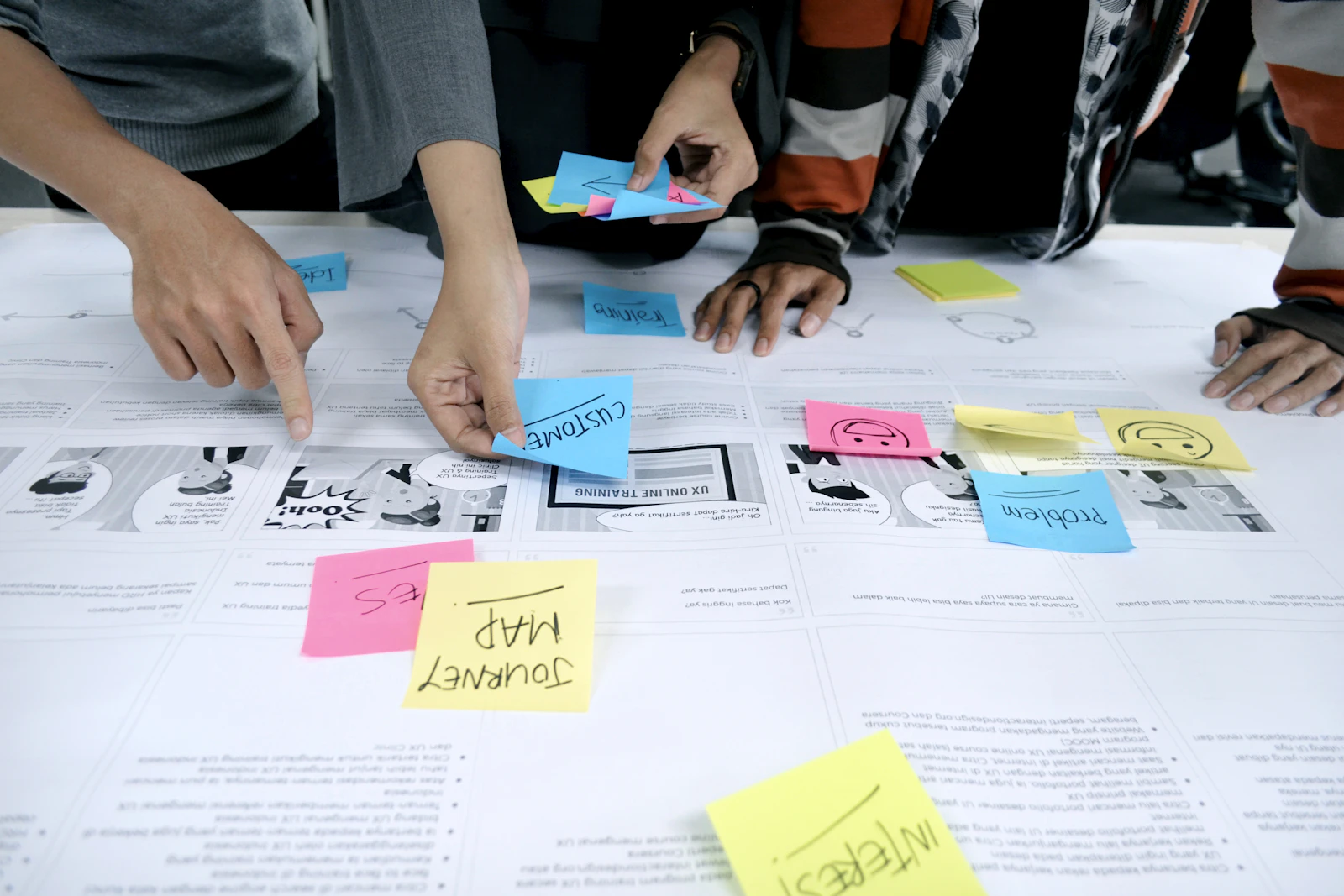
A new observation can be important without answering a new research question. A participant who describes a problem outside the interview guide may have revealed a related need, a different context, or a different phenomenon. The distinction matters because the evidence already collected may support one conclusion but not the other.
Before changing the study, preserve the observation and its context. Then compare the original and revised study boundaries. If the change affects the phenomenon, population, context, construct, evidence requirements, or intended product decision, record it as a material question change rather than silently rewriting the original research.
Separate the user need from the research question
A user need is a condition, outcome, or problem a person appears to require in a particular situation. It may emerge from an interview, usability session, field observation, support interaction, or product behavior. At this stage, it remains tied to the person, task, and context in which it appeared.
A research question is the inquiry the study is designed to answer. It defines what the team will investigate, with whom, under which conditions, using what evidence, and for which decision. A question might ask why new users abandon account setup, while a participant’s comments reveal a need for reliable account recovery after changing devices.
Those may be connected, but they are not automatically the same. The account-recovery observation could add context to the setup problem, or it could point to a separate behavior, population, and product decision.
Compare the original and revised study boundary
Write the original question and the proposed question side by side. Then inspect each dimension below. The aim is not to produce a numerical score. It is to identify which commitments changed and whether the existing evidence can still answer the revised question.
Phenomenon or problem
What is the study trying to understand? Compare the original behavior, difficulty, motivation, or outcome with the newly observed one.
A new theme is not necessarily a new phenomenon. Confusion about account setup and confusion about account recovery may both concern access to a product. They become materially different when the team is no longer studying the same experience or mechanism.
A practitioner guide on changing research questions similarly treats a material change to the central phenomenon as a possible boundary between an amended question and a different study. Because that guidance is not a formal methodological standard, use it as a decision prompt rather than a rule: compare the changed question with the original study boundary.
Population
Are the same people affected? Check more than broad demographics. Compare product role, experience level, account status, device access, job responsibility, and other characteristics that could change the behavior under study.
If the original study concerns new users and the new observation comes mainly from administrators, returning customers, or people who share accounts, the evidence may not transfer simply because everyone uses the same product. A changed target population usually requires new recruitment or a narrower claim.
Context and task
Where and when does the need appear? Record the task, trigger, environment, sequence, frequency, and consequences surrounding the observation.
The same person can have different needs during initial setup, routine use, recovery after failure, or a high-pressure work situation. A context change may be a refinement when the original study explicitly included that situation. It may be a new question when the context changes the behavior, constraint, or decision the team must make.
Construct
What underlying concept is being examined? Examples include discoverability, confidence, trust, comprehension, effort, perceived control, task success, or recovery behavior.
A method can remain unchanged while the construct changes. Interviews may be suitable for exploring perceived confidence, but they do not automatically establish task success or the frequency of a recovery problem. If the revised question asks about a different construct, review whether the original prompts, observations, and analysis can support it.
Evidence plan
What would count as an answer? Compare the required participants, tasks, measures, prompts, observations, and analysis.
A change in method does not always mean the question changed. The team might switch from remote to in-person sessions while investigating the same phenomenon with the same decision in view. Conversely, keeping the same method does not preserve the question if the new question requires different tasks, participants, or measures.
Track the evidence chain from participant and context to excerpt, interpretation, theme, and claim. Participant-level traceability helps show whether a new observation came from the same conditions as the original finding or from a materially different situation.
Intended decision
What will the team do with the answer? Compare the original design or product decision with the proposed one.
A study about reducing setup abandonment may support decisions about onboarding content, sequence, or guidance. A study about account recovery may instead inform authentication flows, device-change messaging, or support escalation. Even when the users and product area overlap, a different decision can require a different research question.
Classify the type of change
After comparing the dimensions, classify the change before choosing an action. These categories are a practical synthesis, not a validated classification scheme.
Clarification
The observation makes the original need more specific without changing the study’s essential boundary. The population, context, construct, evidence plan, and decision remain substantially the same.
Action: Update the wording, definitions, or interview prompts. Keep the original study record and explain what became clearer.
Refinement
The question remains about the same phenomenon and decision, but a meaningful qualifier becomes necessary. The team may narrow the population, distinguish one context from another, or specify the task more precisely.
Action: Amend the protocol or analysis plan if needed. Mark which existing evidence still applies and which claims now require qualification.
Extension
The new need is related to the original one but adds a population, context, construct, or decision that the original study did not fully cover.
Action: Preserve the original question, then choose a focused follow-up or a documented amendment. Do not combine the results into one broad claim unless the evidence supports that connection.
Substitution
The team has moved from the original phenomenon or decision to another one. The new question may be more urgent or more interesting, but the existing study was not designed to answer it.
Action: Keep the original question and findings intact. Open a separate research track or formally close and redesign the study with a clear record of the change.
New study
The population, context, construct, evidence requirements, and intended decision have changed enough that the original evidence would not answer the revised question.
Action: Treat the work as a separate study. The earlier research can provide context or hypotheses, but it should not be presented as evidence for the new question.
Apply the framework to an example
Consider a hypothetical team studying why new users abandon account setup. During sessions, several participants describe difficulty recovering access after changing devices.
The observation may be an extension if those participants encountered recovery during the same setup journey and the team wants to understand how setup guidance should address that risk. The original population and product decision may remain largely intact.
It may require a revised question if the team now wants to understand account-recovery behavior after device changes. That question introduces a different context, task sequence, and possibly construct. The team may need participants who have recently experienced device changes, prompts about recovery actions, and evidence about what they did rather than only what they remember from setup.
It becomes a separate study if the intended decision shifts to redesigning authentication recovery for established users. The original setup sessions can explain why the issue surfaced, but they cannot by themselves establish how common the recovery problem is or which recovery design works better.
Choose the next action based on the boundary change
Use the smallest response that protects the distinction between the original and revised questions.
Keep the question. Choose this when the new observation adds context but does not change the phenomenon, population, construct, evidence plan, or decision. Record the observation as a related theme and avoid overstating it.
Refine the question. Choose this when the same study can answer a narrower or more precise version of the question. Update the protocol, analysis notes, or claim boundaries, and preserve the earlier wording in the decision record.
Amend the study. Choose this when the new need is relevant to the same decision but requires additional recruitment, prompts, tasks, or measures. Identify which data were collected under the original plan and which will be collected under the amendment.
Run a focused follow-up. Choose this when one unresolved issue controls the decision and can be investigated without redesigning the whole study. A narrow follow-up often protects clarity better than adding several loosely related questions to the original sessions.
Open a separate study. Choose this when the target phenomenon, population, context, construct, evidence plan, or intended decision has materially changed. Link the studies for context, but keep their claims separate.
Record the decision before changing the plan
A short decision record prevents a revised question from appearing as if it had been the original plan. Include:
- Original question: What was the study designed to answer?
- New observation: What was seen or reported, by whom, during which task or context?
- Proposed question: What does the team now want to understand?
- Changed dimensions: Which of phenomenon, population, context, task, construct, evidence plan, or decision changed?
- Evidence that remains usable: Which participants, observations, or analyses still apply?
- Evidence that is missing: What would the revised question require that the study does not contain?
- Routing decision: Keep, refine, amend, follow up, or open a separate study.
- Claim boundary: What may the team say now, and what remains unknown?
- Owner and review point: Who records the decision, and when will the team revisit it?
This record should preserve contradictory and context-specific cases rather than flattening them into a single new theme. Context-preserving qualitative coding can help retain the task and conditions that determine whether two observations are genuinely comparable.
What this framework cannot establish
The framework can clarify whether a revised question still fits the original study boundary. It cannot establish how prevalent a need is, prove that one product change caused an outcome, or show that a follow-up method will produce better research. Those claims require evidence suited to the relevant population, construct, context, and decision.
It also cannot remove judgment. A team may reasonably decide that a newly discovered need deserves immediate attention even when it requires a separate study. The important distinction is to make that tradeoff explicit instead of presenting the original evidence as if it answered the new question.
The practical test is simple: preserve the observation, compare the boundaries, identify the changed commitment, and route the work accordingly. A changed user need becomes a changed research question only when the question’s phenomenon, population, context, construct, evidence requirements, or intended decision has moved beyond what the existing study can defensibly answer.